
What Small Signs of Progress Can Look Like in ABA Therapy
Signs of progress in ABA therapy show up in daily routines before big milestones. Learn what early wins look like and how to spot real growth at home.

Key Points:
- Signs of progress in ABA therapy often appear in everyday moments.
- These include smoother transitions, faster recovery from an upset, and clearer attempts at communication.
- Children may need less help with routines, respond to fewer prompts, and show skills in multiple settings before reaching bigger milestones.
Progress doesn't always announce itself with a celebration. Sometimes, a child who struggled to leave the house now puts on shoes without a meltdown. Or the morning routine that used to take an hour suddenly flows in thirty minutes. These quiet changes matter just as much as the bigger wins everyone hopes for.
In ABA therapy, these shifts are real signs of progress, even if they don't feel like a huge milestone yet. It is very common to wait for a big "aha!" moment, but the most lasting changes often start small and grow over time.

Why Early Progress in ABA Can Be Easy to Miss
ABA therapy services teach skills in small, manageable steps. That's how the approach works, by breaking down bigger goals into pieces that a child can actually learn. Early signs of progress in ABA therapy often show up as a child needing just a little less help than they did last week.
A child doesn't need to master a goal before families notice growth. For example, a child might not be speaking in full sentences yet, but they might be reaching for your hand more often to show you what they want. That is a huge win.
The CDC reports that about 1 in 36 children aged 8 years has been identified with autism, which helps explain why so many families ask how to spot real progress early. When change feels gradual, it's easy to wonder if anything is actually working.
Signs of Progress in ABA Therapy Can Show Up in Small Daily Moments
Think of these examples as signs of growth, not a rigid test. These are simple ways signs of progress in ABA therapy may show up at home, at school, or in the community.
Every child moves at their own pace. Some find their groove in daily routines first, while others show progress in how they communicate or in how they bounce back after a tough moment.
Smoother Transitions Can Be an Early Win
Transitions are often tough for kids with autism, so even small changes are worth celebrating. Your child might still not love ending playtime or heading out the door, but you might notice the process takes less time, requires fewer reminders, or involves less stress than before.
You may notice:
- Less protesting when an activity ends.
- More willingness to take the next step.
- Fewer long build-ups before moving on.
- Better carryover of routines between home and school.
Smoother transitions don’t mean every change is suddenly easy. It simply means your child is handling the moment with a bit more resilience than before. That is genuine progress.
Shorter Recovery Time Can Show Real Growth
Progress isn’t just about having fewer tough moments. It’s about how quickly your child bounces back. You may notice them:
- Accepting comfort sooner.
- Taking a short break and returning to a task.
- Needing less help from an adult to reset.
Sleep plays a major role in this. Up to 80% of individuals with autism report sleep issues. On tired or busy days, seeing a faster recovery is a strong sign that their coping skills are really starting to build.
One hard afternoon doesn't erase growth. Your child might have a rough day and still recover better than they did a month ago. Looking at the long-term pattern tells a much better story than focusing on a single tough moment alone.
Better Communication Often Starts Before Bigger Language Changes
Improvement with communication skills does not always begin with longer sentences. Sometimes it starts with a simple point, using a picture, or reaching out for help. These small steps are often some of the clearest signs of progress in ABA therapy.
You may notice:
- Asking instead of grabbing.
- Looking toward an adult before getting upset.
- Using a taught phrase more often.
- Answering simple choices more clearly.
Communication can look different from child to child. Whether they use gestures, signs, a device, or spoken words, the big win is having a clearer way to express a need. The key change is that the child has a clearer way to express a need, and that can lower frustration in daily life.
More Independence in Routines Is One of the Clearest Signs Families Notice
Daily routines at home often show progress in a very clear way. You might see your child washing hands with fewer reminders, sitting through a meal longer, or starting a routine without needing every single step explained.
You may notice:
- Getting dressed with less support.
- Washing hands with fewer prompts.
- Starting cleanup after just one reminder.
- Moving through familiar routines more smoothly.
These changes really help lower stress at home. Mornings can move faster, bedtimes feel less rushed, and you might only have to repeat a direction twice instead of five times.
A 2024 systematic review found that 86% of high-quality experiments showed that caregiver-led interventions improved daily living skills. Home routines are truly one of the best places to see that growth happen.
Small Social Changes Can Count Too
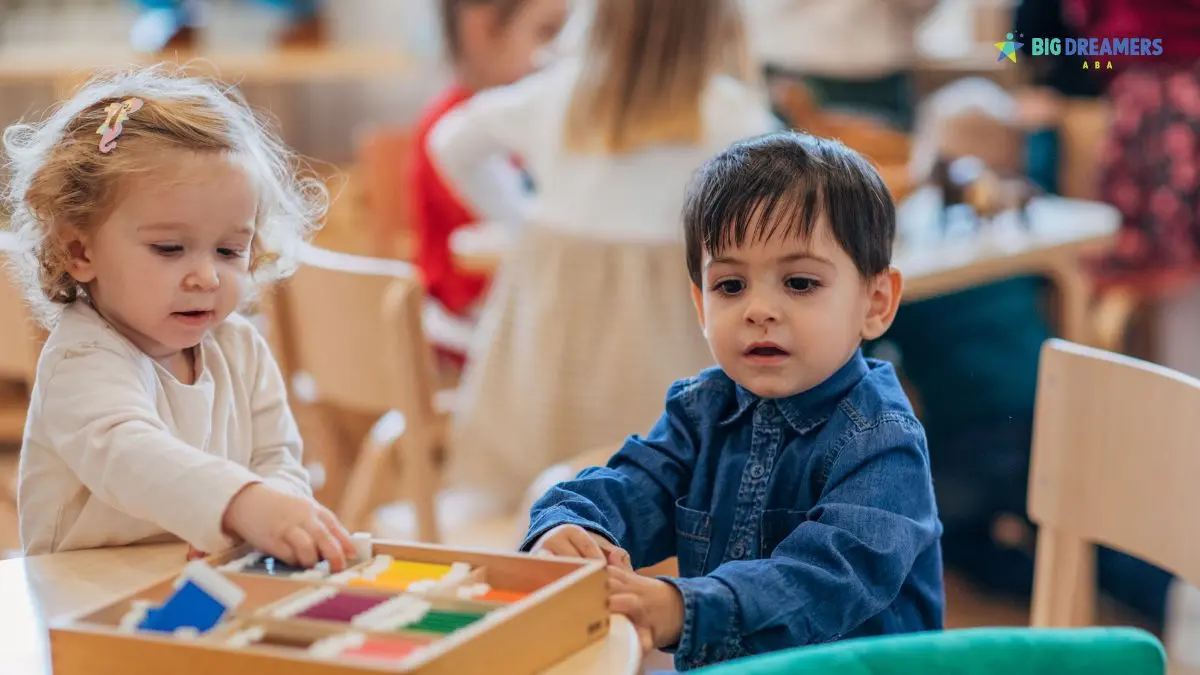
Social growth does not have to look dramatic to be meaningful. A child may wait a little longer during turn-taking, tolerate another child nearby, join a short back-and-forth game, or accept praise with less discomfort.
These moments can look small, but they often make daily participation easier. A child who can stay in a simple shared activity for a little longer may have an easier time during play, class routines, or family activities. That does not mean every social moment becomes easy. It means participation may be starting to grow.
What Parents Can Track Without Turning Home Into a Data Sheet
You do not need to carry a clipboard around your house to see if therapy is helping. However, progress notes at home can help you notice patterns that are hard to see in the heat of the moment. At Big Dreamers ABA, we love it when caregivers share these small "real world" updates with us because it helps us see how a child is doing outside of a session.
Try keeping a simple list on your phone or a notepad of things like:
- What got easier: Did brushing teeth feel less like a struggle today?
- Prompting: Did you only have to ask once instead of five times?
- Speed: Did it take less time to get out the door?
- New places: Did a skill they learned at the center show up at the grocery store?
A quick photo or a one-line text to your BCBA can be more useful than a giant chart. It helps the whole team see that the child is starting to use their new skills in different parts of their life.
When Progress Feels Slow, What Should Parents Keep in Mind?
Growth is rarely a straight line. Some weeks it might feel like your child is taking three steps forward, and the next week it might feel like they took two steps back. This is a normal part of the learning process. It is important to remember that hard days do not erase the progress your child has already made.
Instead of asking, "Is everything perfect yet?" try asking, "What is becoming just a little bit more consistent?"
Maybe they are still struggling with loud noises, but they are much better at asking for their headphones. That is a win. Remember, a child does not need a huge breakthrough for therapy to be moving in the right direction. Every tiny step is a building block for the future.

FAQs About Early Progress in ABA Therapy
What is generalization in ABA therapy?
Generalization in ABA therapy is the ability to use a learned skill in more than one place, with more than one person, or at a different time. A child who asks for help in session and then does it at home is showing generalization
Can progress show up at home before it shows up at school?
Yes. Progress can show up at home before school because home often feels more familiar and predictable. Research also shows caregiver-implemented supports can improve daily living skills, which means home routines may be one of the first places a new skill becomes easier to notice.
Do small signs still count if the main goal is not met yet?
Yes. Small signs still count if the main goal is not met yet, because ABA often builds larger skills in smaller steps. Less prompting, faster recovery, better transitions, and more communication attempts can all show that a child is moving in a helpful direction.
Notice the Small Wins and Build on Them
Small changes in transitions, communication, and routines often show that learning is starting to carry over into daily life. Those early signs can give families a clearer picture of what is working and what needs more support.
At Big Dreamers ABA, we help families across Maryland and Georgia through home-based therapy, center-based therapy, in-school support, and caregiver training. Our team can help you look at the progress your child is already showing, build next steps that fit real routines, and support growth at home, at school, and beyond.
Get in touch with us to talk through what you’re seeing and how we can help your child reach their next big win.

Need Support? We're Here to Help
Our dedicated team provides personalized ABA therapy to help your child thrive. We make access to quality care simple and effective.
Contact us today to start ABA therapy.
Recent articles




How ABA Therapy Helps Children Build Communication Skills

Signs Your Child May Benefit from ABA Therapy
