How to Prepare Your Home for In-Home ABA Therapy
You don't need a therapy room or special equipment. Learn what actually helps your child settle in before the very first in-home ABA session.
Deciding to begin in-home ABA therapy is a big step, and it is normal to wonder what you should do before the first therapist walks through your door. Many parents searching for in-home ABA therapy near me or ABA therapy at home assume they need to build a special therapy room or buy expensive materials. The truth is much simpler and much more reassuring: the best preparation is small, practical, and mostly about your everyday space.
At Big Dreamers ABA, we work with families across Maryland and Georgia who are starting home-based services for the first time. This guide walks you through exactly how to prepare your home for in-home ABA therapy, what your therapist actually needs, and how a little planning helps your child settle in faster.
Why the Home Environment Matters So Much in ABA
In-home ABA therapy works because it happens where life happens. Instead of practicing a skill in a clinic and hoping it carries over, your child learns it in the same kitchen, hallway, and living room where they will use it every single day.
That is called generalization, and it is one of the biggest advantages of home-based therapy. When a child learns to ask for a snack at their own kitchen counter, that skill sticks. When they practice putting shoes on by the actual front door, the routine becomes real.
Because the home is the classroom, the way your space is set up genuinely influences how sessions go. This does not mean your home has to be perfect. It simply means a few thoughtful adjustments can make learning easier for your child and smoother for your therapist.
Step 1: Choose a Primary Session Space
Your therapist will need a spot to work with your child. Ideally, this space is:
- Reasonably quiet. Away from the loudest parts of the house during session hours.
- Low in visual clutter. Fewer distractions means easier focus, especially early on.
- Big enough to move. ABA is not sit-still work. Play, movement, and floor time are common.
- Consistent. Using the same area most days helps your child know what to expect.
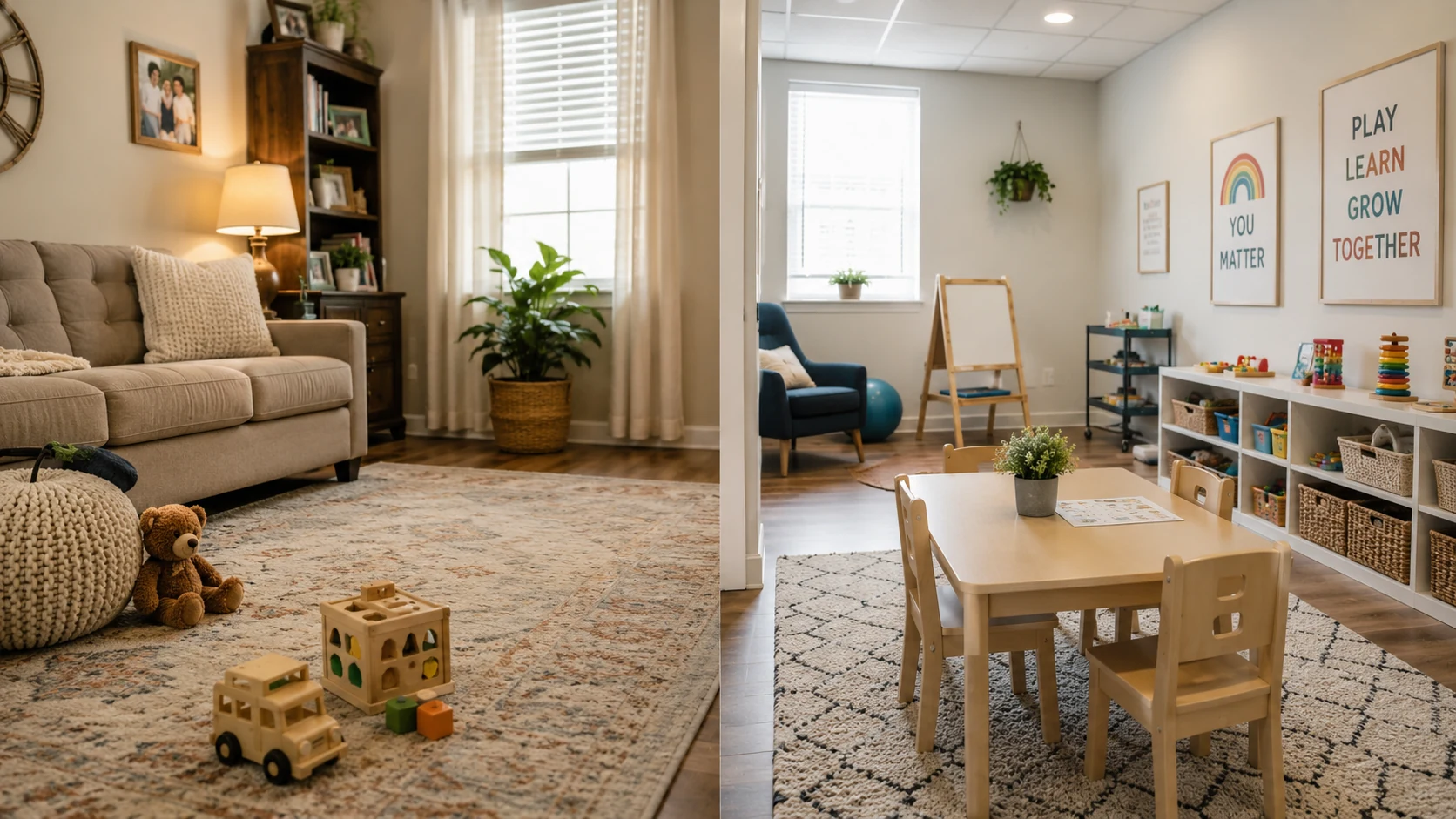
A corner of the living room, a playroom, a finished basement, or even a bedroom can all work well. You do not need a dedicated therapy room.
One helpful tip: pick a space with a door or clear boundary if possible. Being able to gently limit interruptions from siblings or pets makes a real difference in the first few weeks.
Keep in mind that sessions will not stay in one room forever. As your child progresses, your therapist may intentionally move into the kitchen, bathroom, or yard to work on real-world routines. That is a sign of progress, not disorganization.
Step 2: Reduce Distractions Without Removing Everything
Parents sometimes overcorrect here and strip a room bare. That is not the goal. Instead, aim for a space where your child can pay attention to their therapist and their materials.
Practical things that help:
- Turn off the TV and background music during session time
- Put away the tablet or favorite screen unless the therapist plans to use it
- Move out toys that trigger meltdowns when they are put away
- Keep a few preferred toys accessible, since they are often used as motivators
Your therapist will also want to know which items your child loves most. Those favorite toys, snacks, and activities become powerful teaching tools, so do not hide them. Just let your therapist help decide when they come out.
Step 3: Prepare a Simple Materials Area
Most providers bring their own teaching materials, data sheets, and reinforcement items. What helps enormously is having a small, dedicated spot where those things can live between visits.
A shelf, a bin, a drawer, or a corner of a closet is plenty. This prevents materials from getting mixed into general toys and saves setup time at the start of every session.
If your therapist asks you to have certain items on hand, such as specific snacks, a favorite book, or clothing for dressing practice, keeping them in that same spot means nobody spends the first ten minutes searching.
Step 4: Talk to the Rest of the Household
This step gets skipped often, and it matters more than most families expect.
Siblings. Explain in simple, age-appropriate terms that a helper is coming to play and learn with their brother or sister, and that sometimes they can join in and sometimes they will need to play elsewhere. Giving siblings their own plan for session time prevents a lot of friction. Some families set up a special activity that only happens during sessions.
Other caregivers. Grandparents, nannies, and anyone else regularly in the home should know when sessions occur and understand the basics of what is being worked on. Consistency across adults is one of the strongest predictors of progress.
Pets. Friendly dogs are wonderful, but an excited pet can derail a session quickly. Plan where your pet will be during session hours.
Step 5: Build the Schedule Into Your Routine
In-home ABA works best when it becomes a predictable part of the week rather than an interruption to it.
Think about your child's natural rhythms. Are they most regulated in the morning? Do they need a snack and quiet time after school before they can engage? Share this honestly with your BCBA during the assessment phase. A schedule built around your child's real energy patterns produces better sessions than one built purely around convenience.
Once a schedule is set, help your child anticipate it. Many families use a visual schedule, a picture card, or a simple verbal countdown so the therapist's arrival is never a surprise.
Step 6: Get Ready for Your Own Role
In-home therapy naturally invites parents in, and that is one of its greatest strengths. You are not expected to be a therapist, but you will be part of the team.
Ways to prepare for your role:
- Decide where you will be during sessions so you are available but not hovering
- Keep a small notebook or phone note for questions that come up during the week
- Be ready to share honest updates about sleep, illness, appetite, and behavior at home
- Expect to learn strategies you will use between sessions
Your therapist will likely ask you to practice specific things after they leave. This is where the biggest gains happen, so it helps to go in expecting that involvement rather than being surprised by it.
Step 7: Handle the Practical Details Early
A short logistics checklist saves a lot of small headaches:
- Parking and entry. Where should the therapist park, and which door should they use?
- Doorbell or knock. If the doorbell startles your child, ask for a text instead.
- Shoes. Let your provider know your household preference.
- Bathroom access. Point it out on day one.
- Contact numbers. Make sure both sides have current phone numbers for schedule changes.
- Insurance and paperwork. Have documents ready so nothing delays your start date.
What You Do Not Need to Do
It is worth saying clearly, because many parents worry unnecessarily. You do not need to:
- Deep clean or stage your home
- Buy therapy equipment, flashcards, or curriculum materials
- Have a perfectly behaved household
- Hide the reality of a busy family life
Your therapist is coming to see how your family actually functions, because that is what they are helping you improve. An honest picture of your daily routines gives your BCBA far better information than a polished one.
Setting Expectations for the First Few Sessions
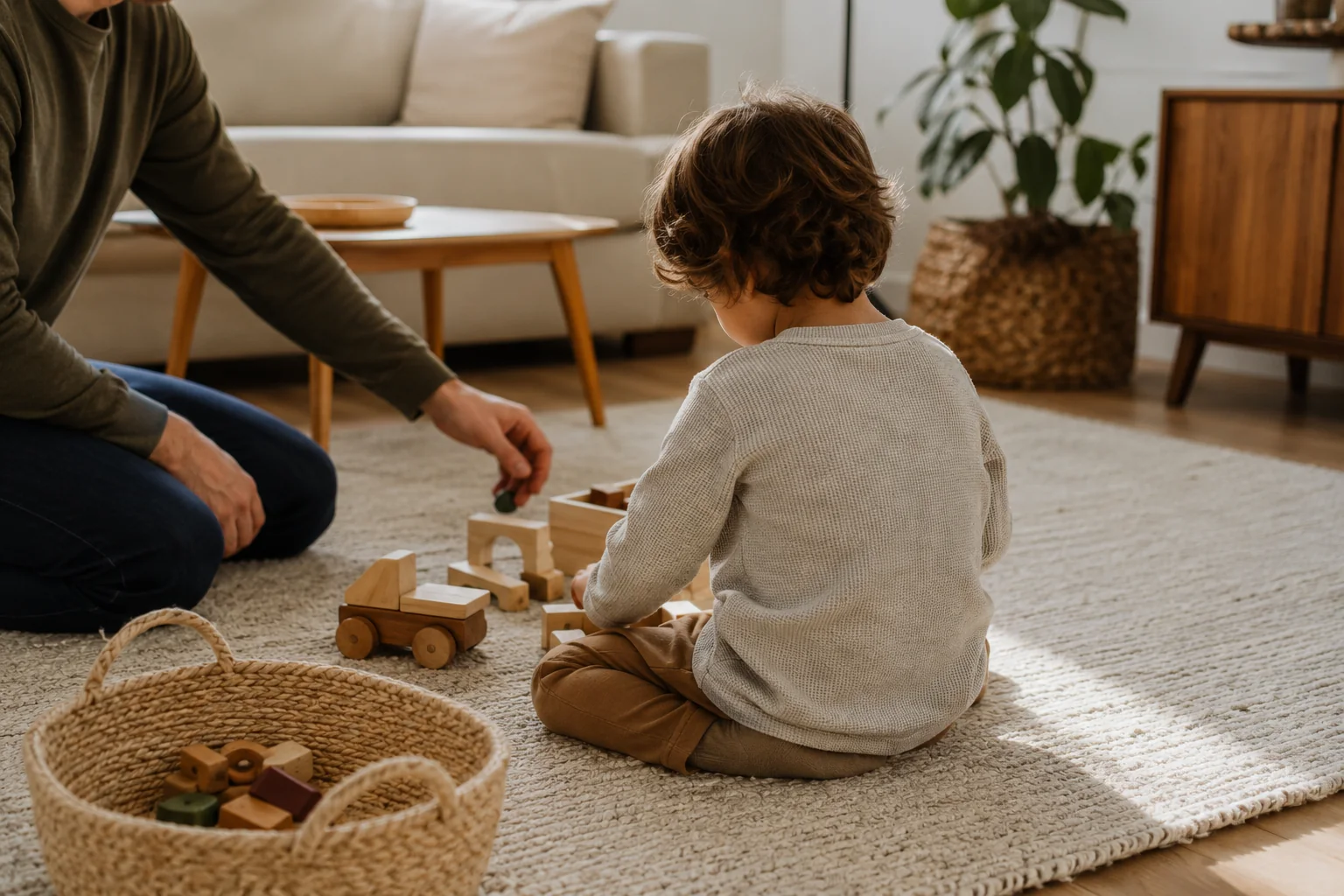
Early sessions often look less like structured teaching and more like relationship building. Your therapist is learning what your child enjoys, what stresses them, and how they communicate. Progress in this phase can look like nothing more than comfortable play, and that is exactly right.
Prepare yourself and your family for a gentle ramp-up. Skills, data, and structured teaching build steadily from that foundation of trust.
Small Preparations, Big Difference
Preparing your home for in-home ABA therapy is less about equipment and more about creating conditions where your child feels safe and your therapist can work effectively. A consistent space, fewer distractions, a household that knows the plan, and a schedule that respects your child's rhythms will carry you a long way.
At Big Dreamers ABA, we support families across Maryland and Georgia with personalized, in-home ABA therapy built around real routines and real homes. If you are considering home-based services for your child, reach out through our contact form and our intake team will guide you through every step, from assessment to your very first session.

Need Support? We're Here to Help
Our dedicated team provides personalized ABA therapy to help your child thrive. We make access to quality care simple and effective.
Contact us today to start ABA therapy.
Recent articles

Signs Your Child May Benefit from ABA Therapy

What to Expect During Your Child's First ABA Therapy Session at Home